


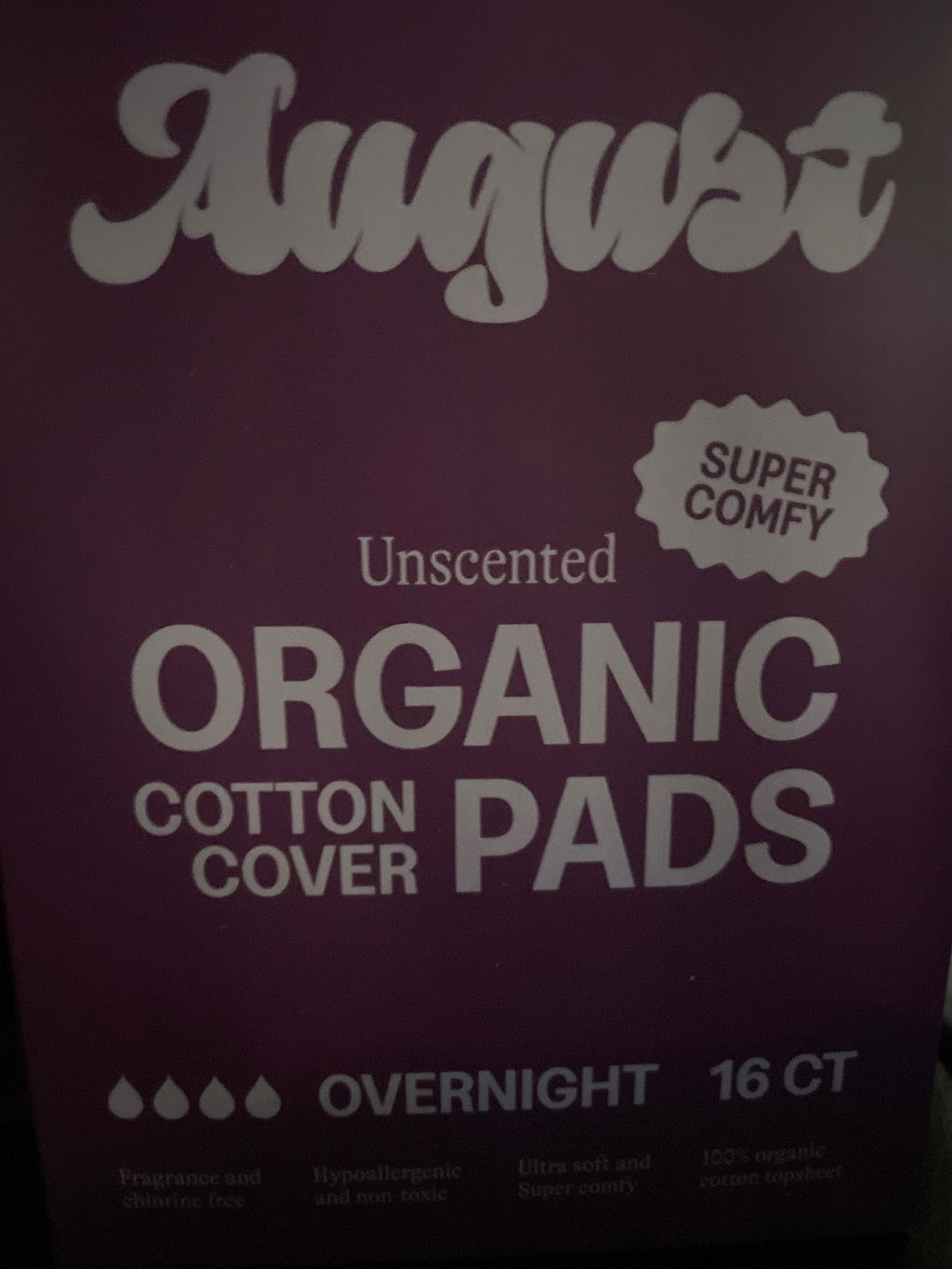
I ordered this days before my period and it arrived the exact day it started! Could ask for better timing. Plus these are the most comfortable pads I have ever worn!
I love august tampons and they’ve been my go-to for about a year now. My only issue with these tampons is that they are smaller than other brands so if you normally use a regular tampax tampon I recommend getting August Super tampons.
I like that the pads are made out of organic cotton, so it makes me feel more comfortable
The was the first tampon I was ever able to use. Definitely made the experience easier and more comfortable!
This was my first ever cup and I was really unsure about the thought of it at first I must say I am so happy with the decision to switch!!
I started using August when I was 19! I am now 25 and I can say I love this brand and its reliability through each and every period. Most importantly August played a huge role in my postpartum recovery with their overnight pads! I’ll always recommend August time and time again.
These are so much more comfortable than the bigger brands who market “comfort”. I’ve been loving this brand and have switched over all my period products to August. You need to try these!
I love them! I can’t even tell I have it on! They are even better knowing I use my Try Your Best coins for a better price!


